Macedon Ranges — Thursdays, all year

Bush & Adventure Playgroup

A place for every child to explore, climb, dig and discover — at their own pace.

Child‑led nature play for children aged 2–5 and the grown‑ups who bring them. Mud, water, loose parts and open bush — with room for every child to join in however they need to.

Book a term
Ages2–5 years
Who comesAll families welcome
Sessions90 minutes, weekly
WeatherAll of it
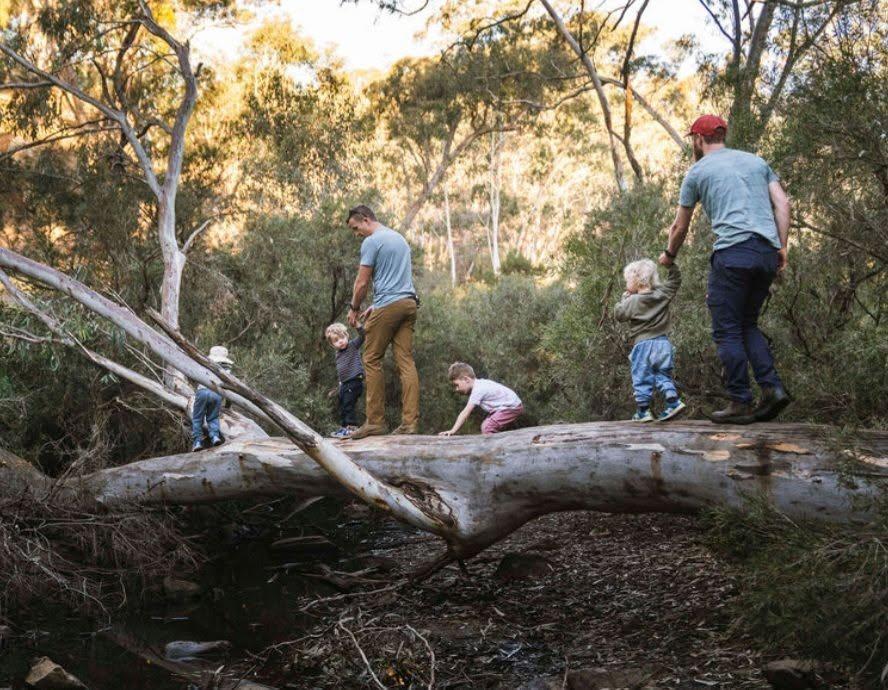
Two fathers and four young children making their way along a huge fallen gum tree above a creek, surrounded by bush.

90 minutes, one place, the same faces every week.

Learning through play and exploration.

Children are naturally drawn to play and exploration — it's how they learn, grow and make sense of the world around them. Our sessions give them the space and freedom to do exactly that.

In a beautiful natural setting, with simple materials and gentle guidance, children are encouraged to follow their own interests and play at their own pace.

That might mean climbing, building and testing what their bodies can do, or quietly observing the small details of the natural world. Every child is supported to engage in the way that suits them best.

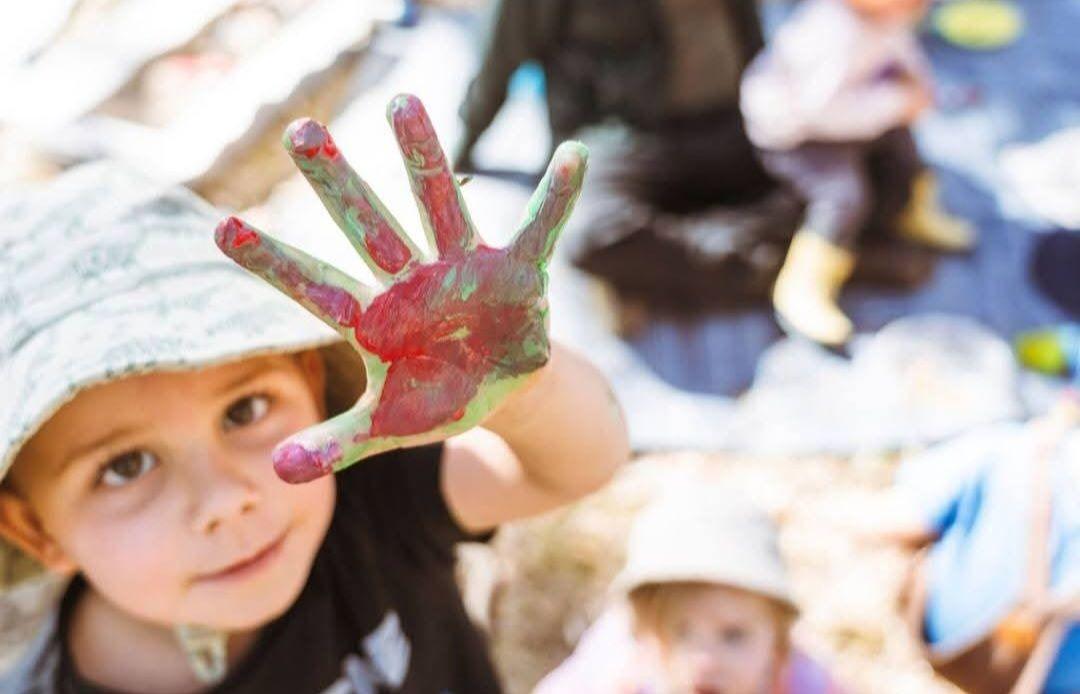
A child in a sun hat holds a hand painted red and green up to the camera, smiling, with other children playing behind.
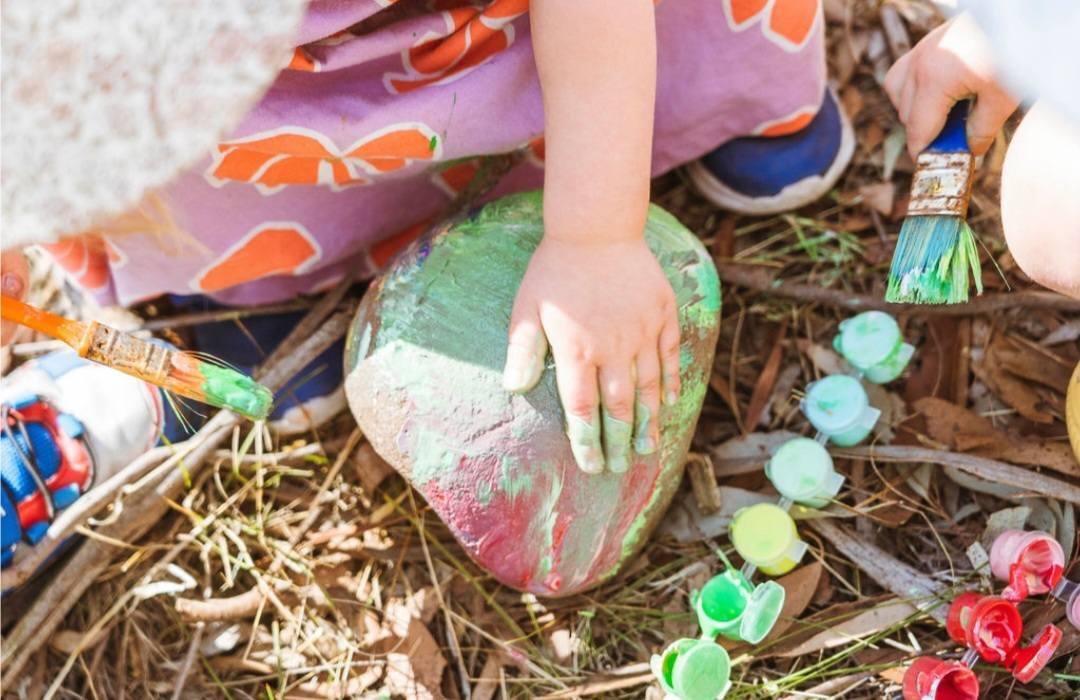
Two small children painting a large river stone green and red with brushes, paint pots scattered across the bark and leaf litter.
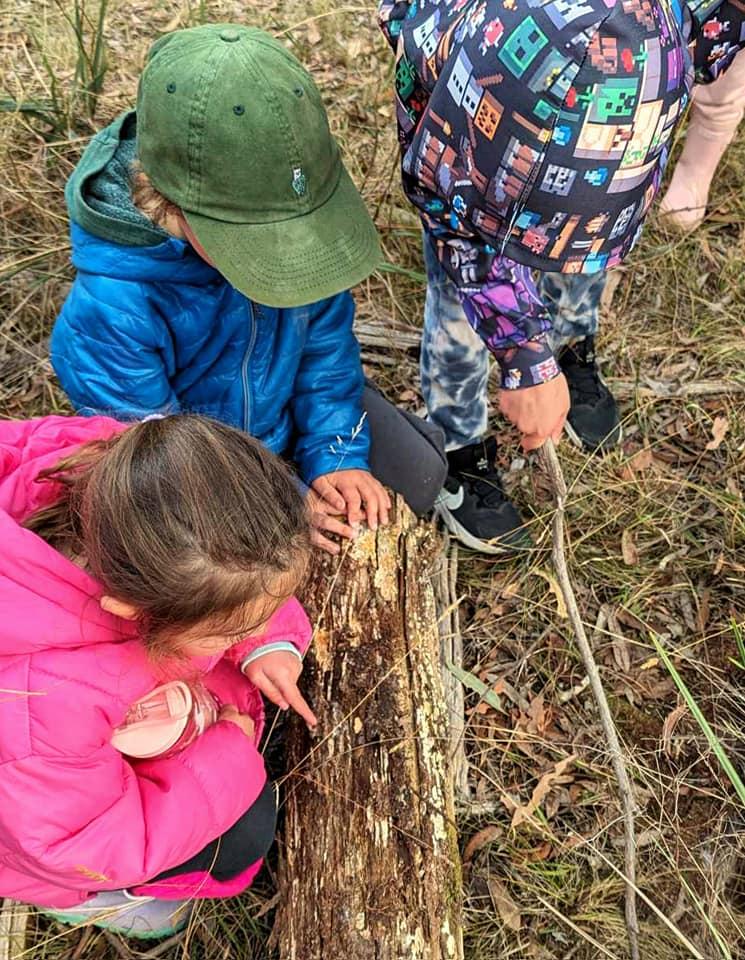
Three children in warm jackets crouched around a fallen log, pointing at bracket fungus growing along its side.

Paint, mud and cornflour — the mess is the point, not a side effect.

What we hold to.

Not a philosophy for the wall. This is what you'll see us actually doing on a Thursday morning.

01

Child-led

They choose what happens. We resist the urge to improve on it, redirect it, or quietly turn it into a lesson.

02

Challenge, sized right

Not danger. The stretch just past what they thought they could do. We take the hazards out and leave the risk in — that is how judgement gets built.

03

Loose parts, real tools

Sticks, rope, tarps, rocks, water, timber. Things that do something, and nothing with one right answer.

04

Unhurried

Nothing to get through. If your child spends the whole morning on one puddle, that was the morning — and a good one.

05

All weather

Cold and wet is a session, not a cancellation. Some of the best mornings are the ones you nearly stayed home for.

06

Every grown-up welcome

Mothers, fathers, grandparents, carers — whoever brings them. Playgroups have quietly become mothers’ space; this one isn’t, and dads will find there’s a real job here for them too.

01Group one

Bush Play

2–5 years — caregiver stays

Sensory, slow and open-ended. Mud, water, bark, leaves, logs to climb over and puddles to sit in — enough range that a babe-in-arms and a busy five-year-old both find their level on the same morning.

  • Sensory-rich, nature-based discovery
  • First real challenges — climbing, balancing, carrying
  • Water and mud play
  • Room for you to slow down too
Book Bush Play
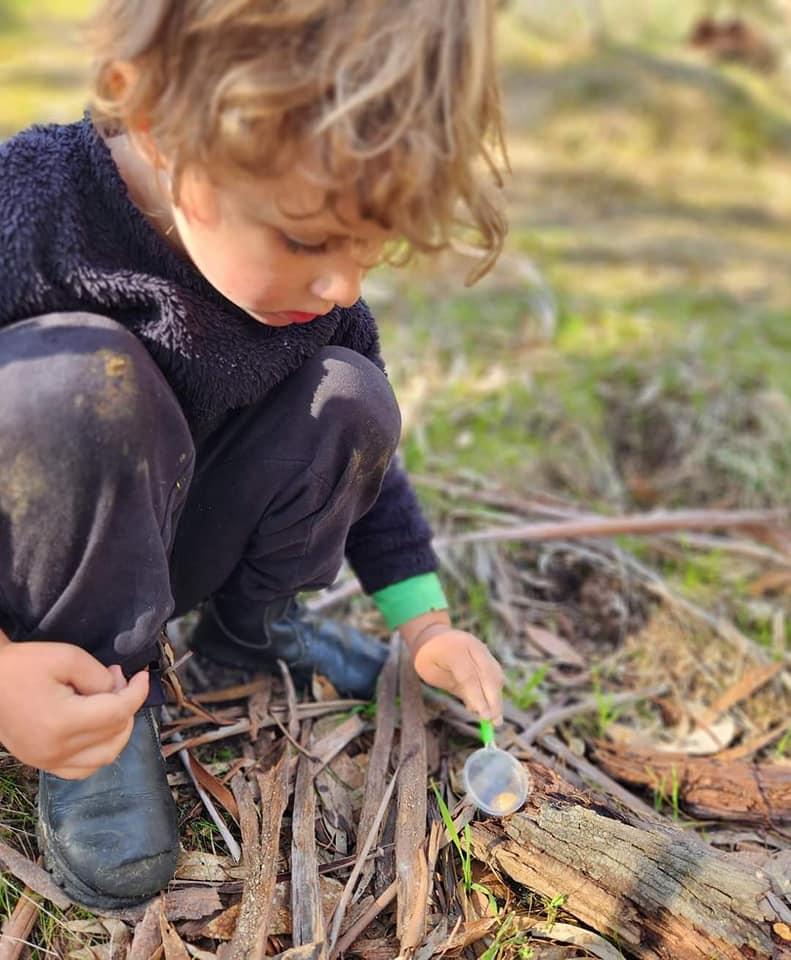
A young child in a fleece jumper crouches on bark and leaf litter, tipping a small scoop, knees already covered in mud.
02Group two

Eco Ranges Adventure

Scaffolded up from Bush Play

For the ones who've outgrown the little group. Bigger challenge, real tools, proper building and climbing. Forest school meets risky play.

  • Real tools, used properly
  • Building — shelters, bridges, tracks, swings
  • Climbing, height and physical challenge
  • Fire, when conditions allow
  • Working together on real jobs
Book Adventure
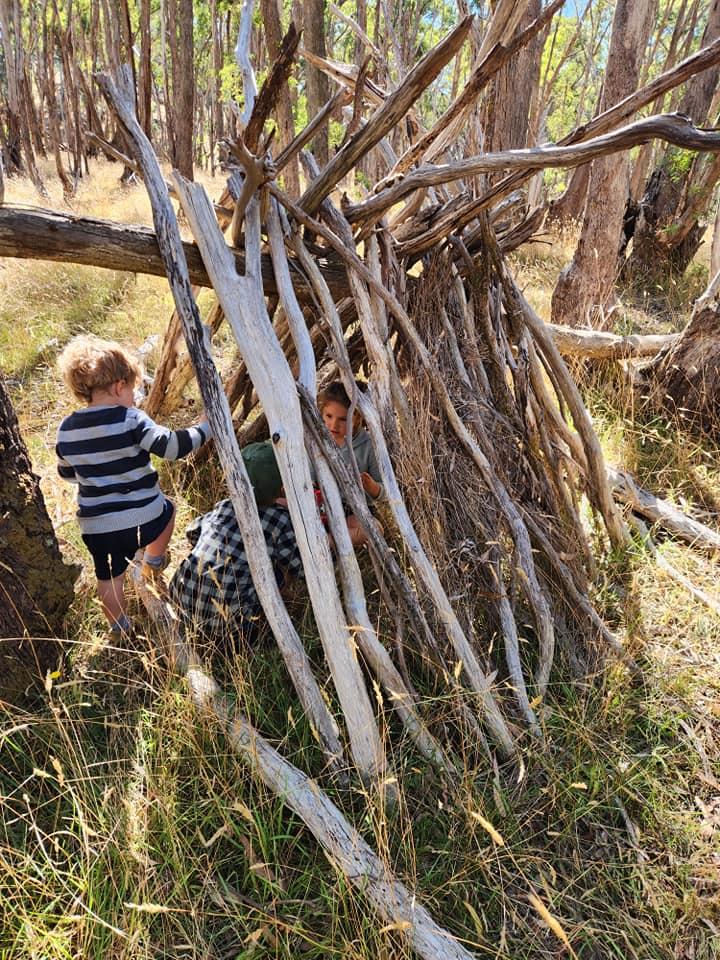
Children leaning long stripped branches against a fallen tree to build a shelter, one child peering out from inside the frame.

Same shape every week. What happens inside it is theirs.

Children settle faster when they know the rhythm — the sensitive ones especially. So the container stays predictable, and the play inside it stays completely free.

01

Gather

Arrive, settle, say hello. No rush to start. Some children need twenty minutes on a lap first, and that's fine.

02

Free play

The long stretch, and the heart of it. Loose parts out, bush open, children leading. We're nearby with our hands down.

03

Morning tea

Everyone stops, sits and eats together. The one part of the morning that's genuinely shared.

04

A walk or a build

Something with a bit of stretch in it, depending on the group, the weather and what they're already into.

05

Pack up as a crew

Everybody carries something. Even the little ones — especially the little ones.

06

Story, then home

A quiet finish, so nobody is dragged away mid-play.

More than a Thursday.

The playgroup is where most families start. These sit alongside it — take whichever ones fit your family.

01

Holiday Programs

School holiday sessions in the bush for older children — building, climbing, fire, and the long unhurried days holidays are supposed to be for.

02

Pop‑Up Adventure Play

Loose parts play brought to community events, festivals, fetes and council days. Children build, we stay out of the way.

03

Saturday Dads

A father–child adventure group, run once a month. Same approach, one grown-up, and a bit further from home. Run in partnership with RAD DADS.

04

Parties & Private Groups

Birthdays, family days and private bookings. Loose parts, real challenge, and nothing that needs a themed tablecloth.

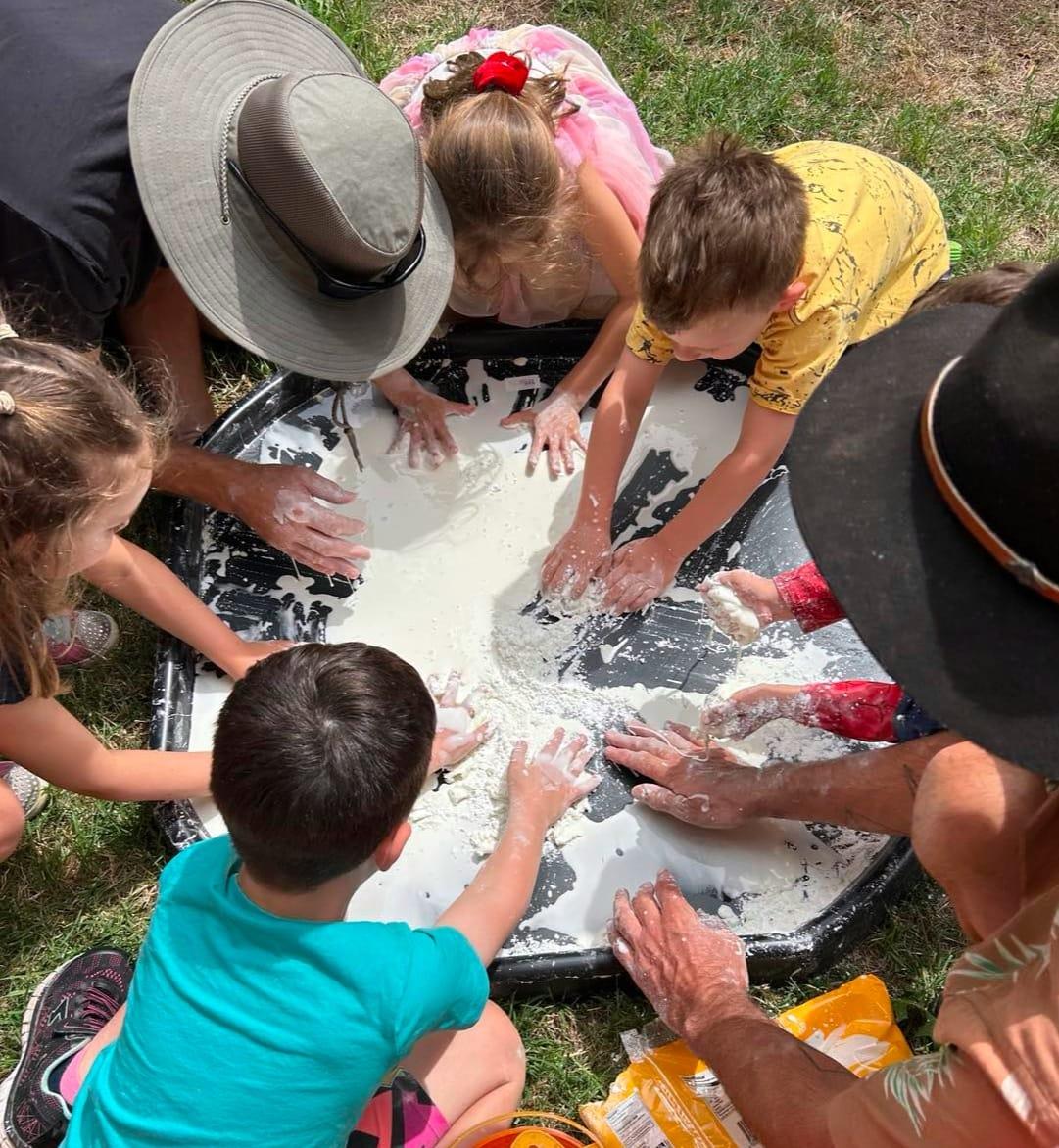
A group of children and adults gathered around a large tub of cornflour mixture, hands deep in it, out in the bush.
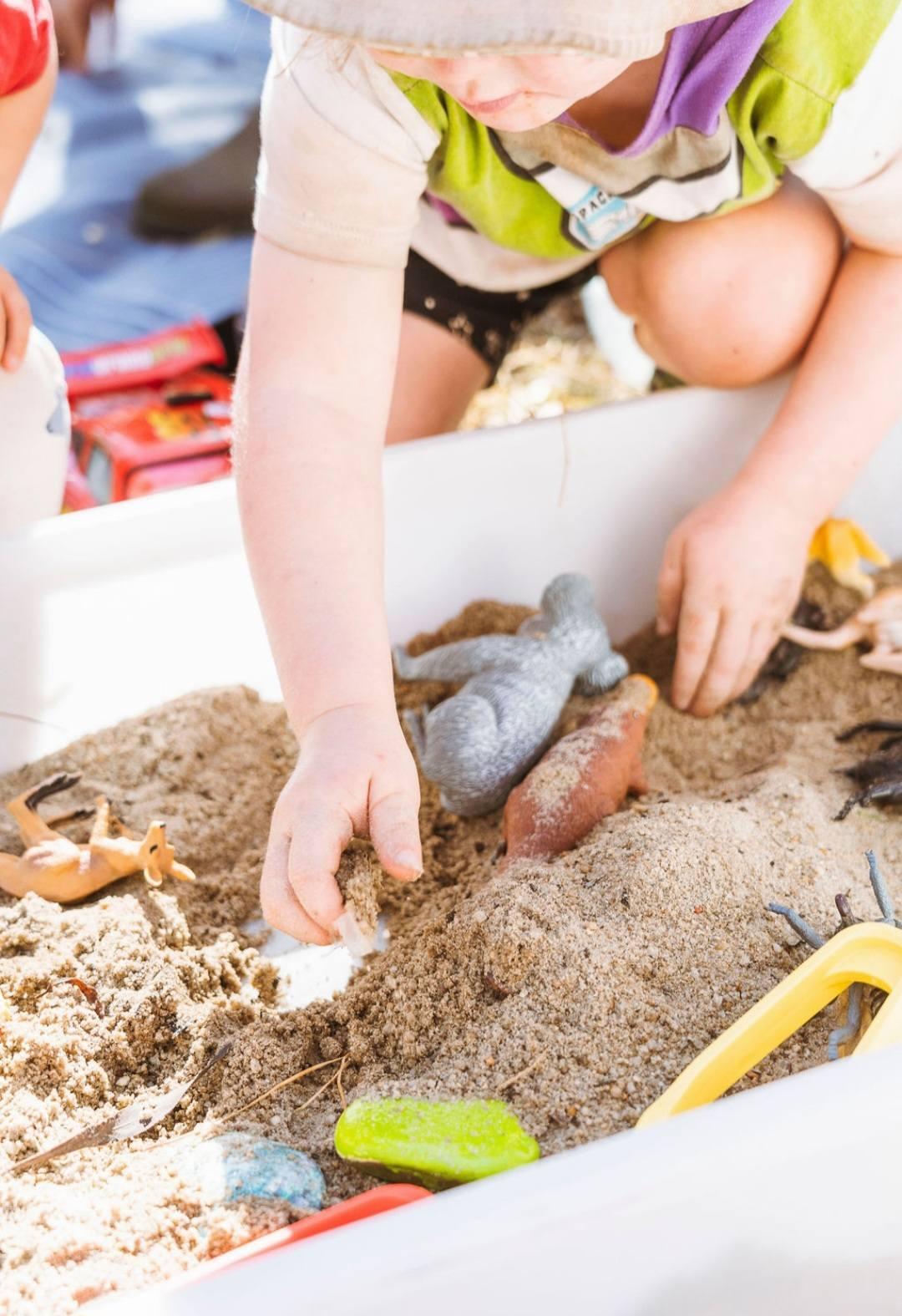
A child kneeling at a sand tray, moving small animal figures through the sand with both hands.
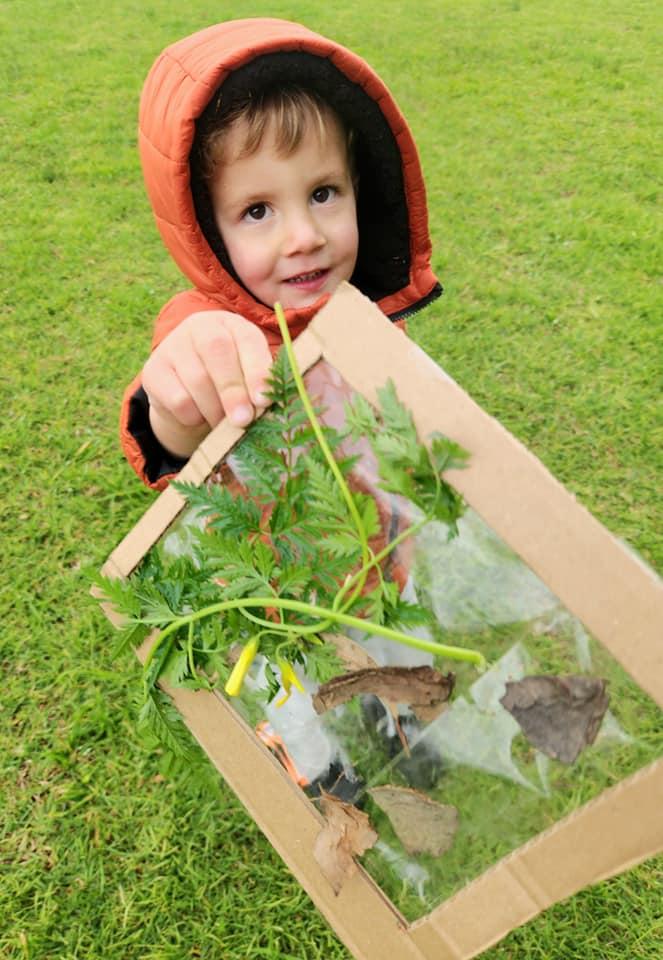
A child holding up a cardboard frame threaded with gum leaves, bark and flowers collected from the ground.

Community events: one big tray, a dozen pairs of hands, no instructions.

The practical bits.

Program

AgesBush Play 2–5 · Adventure school age
WhenThursdays, weekly
Length90 minutes
Group sizeTen families
BookingBy term · waitlist when full
Term fee$150
Who attendsParents & carers stay
WhereMacedon Ranges · sent on booking
IncludedInsurance, materials, tools, tea

Older siblings welcome — please book them in so we can plan numbers.

What to bring

  • Clothes for the actual weather — long trousers always
  • Gumboots or sturdy boots, no sandals
  • A full change of clothes, plus spare socks
  • Raincoat through the cooler months
  • Hat and sunscreen
  • Water and a snack — for you as well

Dress yourself for standing outside for 90 minutes. You'll be there a while, and that's the point.

Is it for you?

  • Your child outside, in real weather, doing real things
  • Play led by them, not run by an adult with a plan
  • Genuine physical challenge — climbing, carrying, balancing, water
  • A chance to practise stepping back and letting them work it out
  • Somewhere your sensitive, intense or high-energy child isn't a problem
  • A small, familiar group and the same faces each week
  • Slow mornings with no schedule to beat
  • Other grown-ups who won't flinch when yours climbs high

Probably not for you if you'd rather a structured, indoor, low-mess morning with an activity to take home. That's a perfectly reasonable thing to want — it just isn't what we do.

Training for the grown‑ups who run the play.

Professional development for schools, kindergartens, early learning centres and playgroups — plus workshops for parents. Practical, hands‑on, and built on developmental science rather than good intentions.

01

Sensory Play

What sensory play is actually doing developmentally, and how to set it up without turning your room into a disaster zone.

  • The seven senses, including the two most services miss
  • Reading a child's sensory profile in the room
  • Low-cost, high-value invitations using natural materials
  • Supporting children who seek, and children who avoid

02

Risky Play

The one educators most want and feel least confident about. How to allow real challenge, defend the decision, and document it properly.

  • Hazard versus risk, and why the distinction changes everything
  • Running a benefit–risk assessment your service can stand behind
  • The six categories of risky play and what each one builds
  • Talking to anxious families and cautious leadership

03

Play Space Design

An audit of the space you already have, and what to change. Most yards are working at a fraction of their potential and it costs very little to fix.

  • Reading your yard for what it actually offers children
  • Loose parts — sourcing, storing, rotating, and surviving audits
  • Turning dead corners into the busiest part of the yard
  • On-site consult with a written report and priorities

04

Playgroup & Bush Program Facilitation

How to actually run it. For services starting a bush program, a playgroup, or an outdoor session and wondering where to begin.

  • Session rhythm — the container that lets play stay free
  • Site selection, weather calls and the paperwork that matters
  • When to step in, when to wait, and how to tell the difference
  • Holding a group of children and their grown-ups at the same time

How it's delivered

Staff meeting session60–90 minutes
Half-day workshopOn site or in the bush
Full-day intensiveTheory plus practical
Play space consultSite visit & written report
Parent information eveningFor your families
Incursions & excursionsSessions run with your children

Who it's for

Kindergartens & early learningEducators & leadership
Primary schoolsTeachers & yard duty staff
PlaygroupsFacilitators & volunteers
OSHC & holiday programsProgram staff
Councils & communityPlay strategy & events
ParentsWorkshops & evenings

Enquire about training

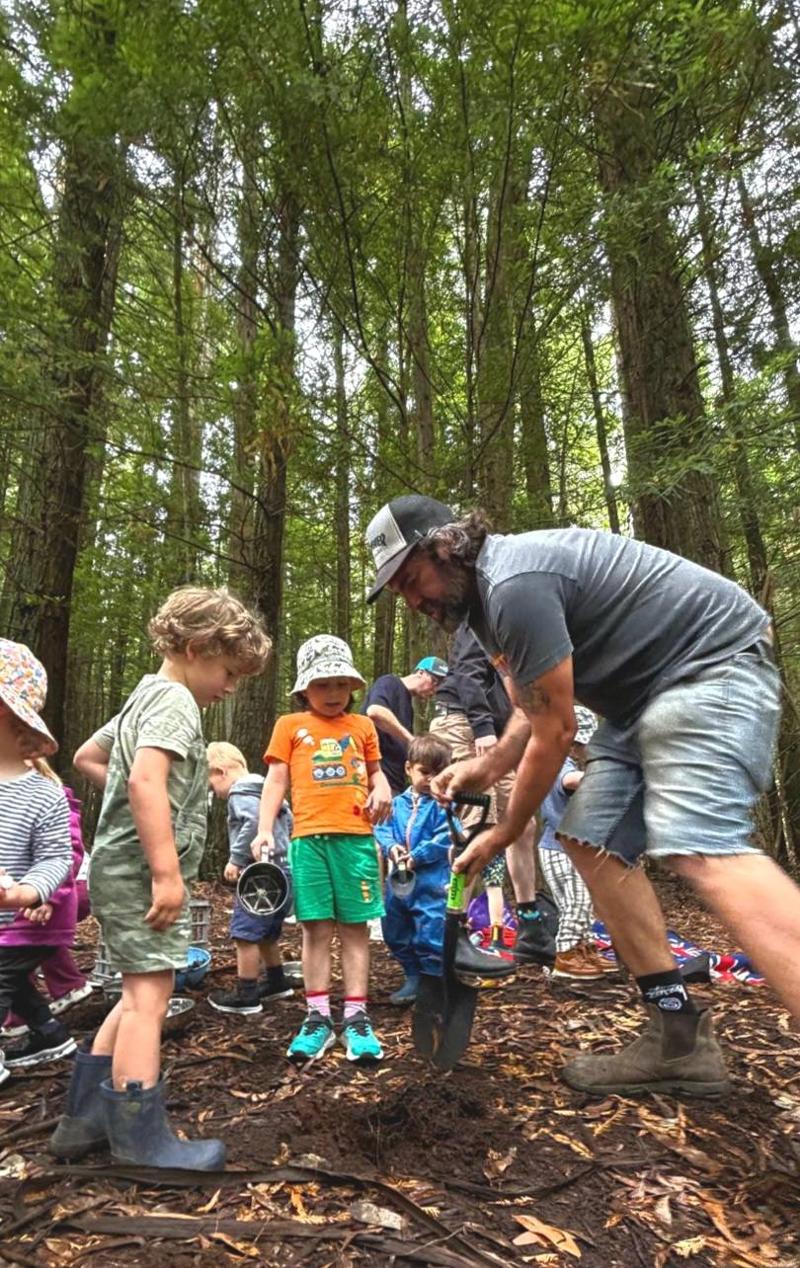
An adult with a spade digging a hole in the forest floor while a group of children crowd in to watch and help.

Who runs it

Built by someone who does this for a living.

Gabriel Carazo is a relationship counsellor, family therapist and play specialist based in the Macedon Ranges, whose practice centres on outdoor and adventure-based work with children and families.

He is the founder of Eco Ranges Bush & Adventure Playgroup, established in 2024, and of RAD DADS, Australia's first council-funded father-specific early intervention program. An ACA-accredited counsellor with fifteen years in the community sector, Gabriel is a Play Strong Institute–trained neuro-relational play therapist who works from the Playwork Principles, with a particular focus on risky, challenge-based play. He originated the NRSCP framework, which grounds outdoor challenge in attachment theory and developmental neuroscience.

Through Axis Therapeutic Services he delivers 1:1 NDIS Adventure Support Work and Outdoor Mentoring, supporting young people through forest skills, navigation and community access. Through Ranges Counselling he provides relationship and family therapy. His professional training spans the Gottman Method, Emotionally Focused Therapy, Forest School and neuro-relational play therapy.

Gabriel has presented original research at Deakin University's Australian Fatherhood Research Symposium and was named Victorian Father of the Year.

"Every child arrives wired to explore. Our job isn't to teach it — it's to allow it."Gabriel Carazo, Founder
Questions.

What happens if the weather's bad?
We run in rain, cold and wind — it's an all-weather program, and wet mornings are often the best ones. We only cancel for genuinely unsafe conditions: high wind and falling limbs, extreme heat, or high fire danger. If we need to cancel we'll tell you as early as we can, and always by the evening before where possible.
Isn't it dangerous?
There's a real difference between a hazard and a risk. A hazard is something a child can't see coming — a rusty nail, an unstable branch, a snake. We remove those. A risk is something they can see, weigh up and choose: a log to balance on, a height to climb. We leave those in, because judging risk is a skill and it's only built by practising it. Sessions are supervised throughout, insurance is included, and nobody is ever pushed into anything.
My child is shy, or takes a while to warm up.
Perfect. The rhythm is the same every week so it becomes familiar quickly, nothing is compulsory, and watching from your lap for the first half hour absolutely counts as taking part. Many of the children who thrive here are the sensitive, intense or high-energy ones who find more structured settings hard going.
Do I have to stay?
Yes. This is a session for you and your child together, not drop-off care. Part of what makes it work is you being there while they stretch, and slowly growing more comfortable with letting them.
Can I bring an older sibling?
Of course — just book them in so we can plan numbers and gear. We do ask that older siblings come with a supportive mindset, so the little ones still get room to lead.
Why book a whole term rather than casually?
Two reasons. Group size is capped, so places have to be held. More importantly, the value builds through repetition — the same faces, the same place, week after week. Children settle deeper and go further when it's familiar. Casual visits rarely get past the first layer.
What if we miss a week?
Places are held for the full term, so missed sessions can't be made up or refunded. If something significant happens, talk to us — we're reasonable people.
How much mud are we actually talking about?
A lot. Bring the full change of clothes, keep a towel in the car, and make peace with it early. Mud isn't mess — it's texture, temperature and resistance, all being worked out by a pair of small hands.

Come and stand in the bush while they figure something out.

Ten families a session, booked by term. Places go to the waitlist once they're gone.

Book a term